Hanoi Travel Guide for Indian Travellers
Hanoi sits about 4 hours from Delhi by air, and direct flights on carriers like VietJet, IndiGo and Vietnam Airlines land you at Noi Bai International Airport (HAN) before lunch, with Air India adding its own nonstop from May 2026. For an Indian traveler, that makes Vietnam’s 1,000-year-old capital one of the easiest and best-value city breaks in Southeast Asia.
This Hanoi Travel Guide for Indian Travellers will help you to understand what to see, what to eat, how to get around, where to stay, and how to keep the trip cheap. It also breaks down how Hanoi changes depending on who you travel with, whether that is a partner, your parents, or young kids.
What Makes Hanoi Special, and Who It Suits
Hanoi is a city full of history and culture. You can see its past in the narrow streets of the Old Quarter, French-style buildings, peaceful lakes and local food. It feels slower and older than Ho Chi Minh City, and that is part of its charm. Hanoi is a place to walk around, try new food and enjoy the local atmosphere instead of rushing from one attraction to another.
This makes Hanoi a good choice for many types of travelers. The table below shows which travelers may enjoy Hanoi the most and what they should keep in mind before planning their trip.
Put simply, Hanoi suits couples, families and first-time overseas travelers far more than party-seekers, who tend to explore Da Nang holiday packages from India for coastal resorts or head toward the nightlife of Saigon.
Places to Visit in Hanoi
Hoan Kiem Lake and the Old Quarter
Start where the city does. Hoan Kiem Lake is Hanoi’s green heart, ringed by a walking path that turns car-free on weekends and lit softly at night. Just north, the Old Quarter’s 36 ancient streets each once sold a single trade, and many still do, from silk to tin to herbal medicine. Getting pleasantly lost here with a coffee in hand is the single best thing to do in Hanoi.
Temple of Literature and the History Trail
The Temple of Literature, founded in 1070, was Vietnam’s first university, and its courtyards and lotus ponds offer a calm break from the street noise. West of the lake, the Ho Chi Minh Mausoleum, his stilt house and the One Pillar Pagoda fill a solemn morning. Pair them with the UNESCO-listed Imperial Citadel of Thang Long and Hoa Lo Prison, whose exhibits trace the country’s wartime past and explain why modern Vietnam feels the way it does.
Quirky Hanoi: Train Street and Water Puppets
Two experiences feel unique to the city. At Train Street, a working railway threads within inches of cafe tables; as of 2026 it is open, but access is managed by the licensed cafes and group tours are restricted, so confirm on the day and follow the guards. In the evening, the Thang Long Water Puppet Theatre stages a 1,000-year-old art form set to live folk music, and it delights every age group.
Day Trips Worth the Early Alarm
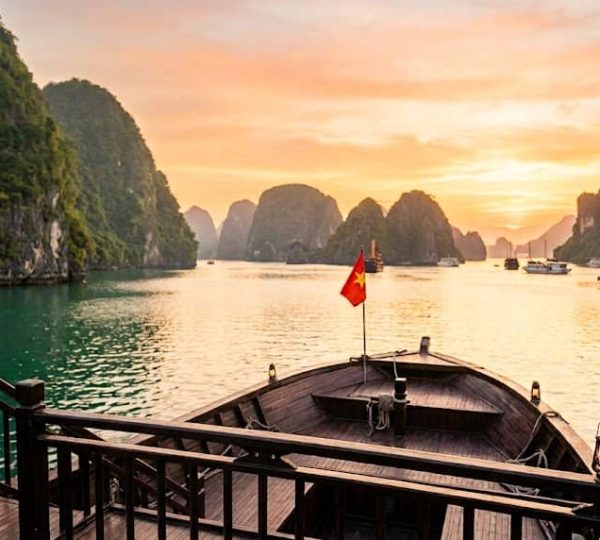
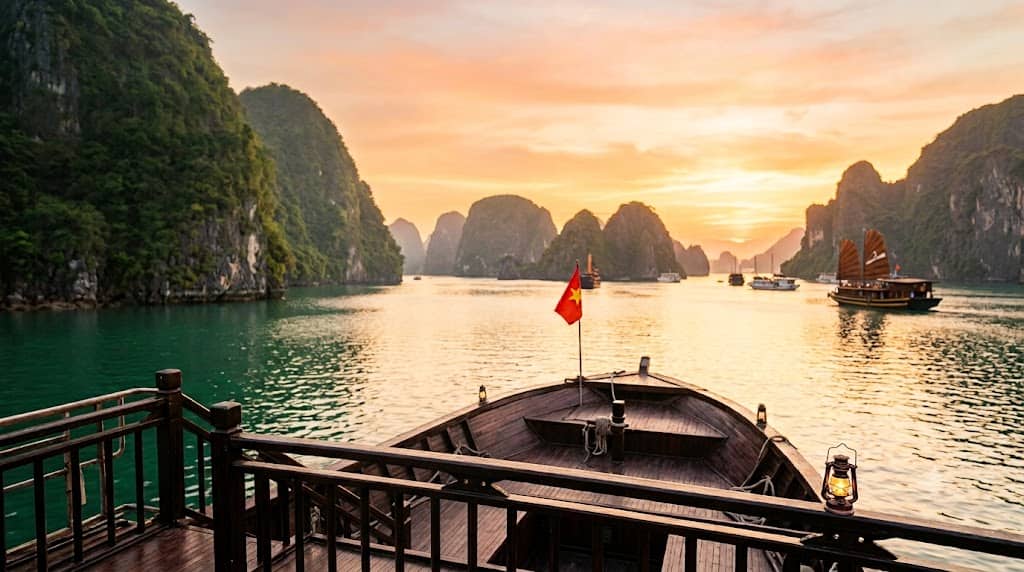
Hanoi is the launchpad for northern Vietnam’s headline sights. Halong Bay, a UNESCO seascape of limestone karsts, is the classic overnight cruise. Ninh Binh, often called Halong on land, floats you by rowboat through caves and rice fields. Sapa’s terraced mountains reward a longer two-day trip. Each one is worth the early start.
These trips mean boats, permits and long drives, which is where a local planner saves you effort. An operator like Trekhops can bundle the Halong cruise, the Ninh Binh transfers and a private guide into one booking and adjust it to your pace over WhatsApp, so you spend the day enjoying the karsts rather than arranging them.
The Food: Hanoi’s Real Draw
Dishes You Should Not Miss
Hanoi is the birthplace of pho, and a steaming bowl at a street stall is a rite of passage. Bun cha, grilled pork with noodles and herbs, is the local lunch of choice, while banh mi turns a French baguette into a crunchy sandwich. Finish with egg coffee, a Hanoi invention where whipped egg yolk sits like sweet custard over strong coffee, or the everyday ca phe sua da, iced coffee with condensed milk.
Indian and Vegetarian Food in Hanoi
Here is the reassurance most Indian travelers want: you will not go hungry. Hanoi has one of the largest Indian dining scenes in Vietnam, grouped in two areas. The Old Quarter holds budget to mid-range favorites like Namaste Hanoi, Tandoor and Foodshop 45, all a short walk from most hotels. West Lake (Tay Ho), a 15-minute Grab ride north, has upscale names such as Dalcheeni and Masala Art.
Pure-vegetarian travelers are well served too. Places like Annam and Ram Krishna focus entirely on vegetarian food across North Indian, South Indian and Gujarati thalis. Strict Jain meals, cooked without onion, garlic or root vegetables, are available at a few restaurants when you give a day’s notice. Vietnam’s own Buddhist culture adds many local vegetarian, or ‘chay’, eateries, so you have options even outside Indian kitchens.
How to Order Vegetarian With Confidence In Vietnam
Local broths often use pork or beef, so a bowl that looks meat-free may not be. Learn one phrase: ‘Toi an chay’ means ‘I eat vegetarian’. Say it clearly and look for the word ‘chay’ on signs and menus, which marks vegetarian food. When in doubt, the Indian restaurants above remove all the guesswork.
Culture and Etiquette
A little courtesy goes a long way. Cover your shoulders and knees at temples and pagodas, and slip off your shoes where asked. Bargaining is expected in markets but not in restaurants or fixed-price shops, and a smile keeps it friendly. Around Tet, the Lunar New Year in late January or February, the city dresses in flowers, but many small businesses close for several days. And crossing the road is a skill: walk slowly and steadily, and let the scooters flow around you rather than darting between them.
Getting Around Hanoi
On Foot and by Grab
The Old Quarter is best on foot, and most major sights sit within a 20-minute walk of Hoan Kiem Lake. For anything farther, use Grab, the local ride-hailing app, which shows the fare upfront and spares you any haggling. A GrabCar across the center rarely costs much, and a GrabBike is cheaper still if you are comfortable on two wheels.
Taxis, Cyclos and the Airport
If you skip Grab, stick to reputable metered taxis such as Mai Linh or Vinasun, and agree the fare before you climb into a cyclo, the three-wheeled pedicab meant for slow sightseeing rather than real transport. From Noi Bai International Airport (HAN), about 35 km out, the options below get you into the Old Quarter.
Where to Stay In Hanoi by Area
Match the neighborhood to your trip. The Old Quarter puts you in the middle of the action, walkable to food and sights, but it stays loud late into the night. The French Quarter, just south, trades that noise for wide boulevards, colonial hotels and a calmer, more upscale feel. West Lake (Tay Ho) is the greenest and quietest, popular with expats and honeymooners who want space and sunsets, though you will Grab into the center for sightseeing.
Types of Markets in Hanoi
Dong Xuan Market
Dong Xuan is Hanoi’s largest covered market, a multi-floor maze of clothes, fabric, household goods and a lively food section. Come for the atmosphere and near-wholesale prices, and bargain gently rather than hard.
The Weekend Night Market
On Friday to Sunday evenings, the Old Quarter’s night market stretches from Dong Xuan toward the lake, packed with souvenirs, snacks and street performers. It makes a fun, free evening even if you buy nothing at all.
Local and Wet Markets
For a slice of daily life, wander a neighborhood wet market or the dawn bustle near Long Bien Bridge. You will not shop much, but you will see the real Hanoi. Across all markets, a polite counteroffer of about half the first price is a fair place to start.
Tips to Save Money in Hanoi
- Eat where locals do; a street bowl of pho costs a fraction of a restaurant meal.
- Use Grab instead of flagging street taxis to avoid inflated fares and detours.
- Try bia hoi, the fresh local draft beer, one of the cheapest drinks in Asia.
- Book Halong and Ninh Binh day trips from local operators, not from home, for better rates.
- Travel in the shoulder months for lower flights and hotel prices.
- Withdraw from bank ATMs and decline the machine’s offer to bill you in rupees.
- Buy a local SIM or eSIM on arrival instead of roaming; data is cheap and fast.
- Carry small change for markets, temples and cyclo rides.
Hanoi for Honeymooners
For couples, Hanoi works best as a romantic base rather than the whole trip. Spend two nights soaking up the Old Quarter and West Lake sunsets, then sail into an overnight Halong Bay cruise, where a private cabin, a candlelit deck dinner and a sunrise over the karsts make the splurge worth it. Back in the city, share an egg coffee in a hidden balcony cafe and book a couples spa session, both of which cost little and feel indulgent. A quieter West Lake or French Quarter hotel keeps the mood calm.
For couples planning a longer Vietnam honeymoon, see the 7 Nights, 8 Days Honeymoon Trip to Vietnam From India.
Hanoi with Family
Hanoi suits multi-generational trips because its pleasures are gentle. Parents and grandparents can stroll Hoan Kiem Lake, watch a water puppet show and eat familiar Indian meals without long treks or extreme heat if you visit in autumn. Keep each day light, with one major sight and plenty of cafe breaks, and use Grab cars to spare tired legs. A day trip to Ninh Binh, with its calm rowboats, tends to please every generation at once.
Hanoi with Kids
Traveling with young children takes a little planning, but Hanoi rewards it. The water puppet theatre, boat rides in Ninh Binh or Halong, and endless ice cream and fruit shakes keep kids engaged, while banh mi and plain rice dishes suit fussy eaters. Skip the stroller in the crowded Old Quarter lanes and use a carrier or a booked Grab car instead, and build in afternoon downtime, since the heat and buzz tire little ones fast. A ground-floor or pool hotel is worth the small premium.
Best Time to Visit Hanoi
Autumn, from September to November, is Hanoi at its finest, with cool air, clear skies and golden light made for walking. Spring, March to April, is a close second, mild and less crowded. Summer, May to August, brings heat and monsoon downpours, while winter, December to February, turns cool and damp, so pack a light jacket. Skip the days right around Tet if you want every shop and stall open.
Practical Essentials
The Visa: Quick and Online
Indian passport holders need a visa, and the easiest route is the e-visa. Apply on the official portal at evisa.gov.vn, pay about USD 25 (roughly ₹2,100) for a single-entry visa valid up to 90 days, and expect approval in 3 to 5 working days. Keep your passport valid for at least 6 months. Rules and fees change, so confirm the latest on the official site before you book.
Currency and Quick Conversions
Vietnam uses the dong (VND), and the numbers look large at first. As of 2026, ₹1 is worth about 275 VND, so 100,000 VND is close to ₹365. A quick trick: drop three zeros from a dong price, then multiply by about 3.6 to reach rupees, which turns a 50,000 VND bowl of pho into about ₹185.
- 20,000 VND is about ₹75, a street coffee.
- 50,000 VND is about ₹185, a bowl of pho.
- 100,000 VND is about ₹365, a casual meal.
- 500,000 VND is about ₹1,825, a nice dinner for two.
Staying Connected
Buy a local SIM or an eSIM for cheap, fast data, which powers Grab and maps through the whole trip. Free Wi-Fi is common in cafes and hotels. English is limited outside tourist areas, so a translation app helps in markets and taxis.
Frequently Asked Questions
Yes. Hanoi is broadly safe, including for solo and first-time travelers, with petty theft the main thing to watch. Keep an eye on your phone and bag in crowds and around Train Street, use Grab at night, and you will be fine.
Three days cover the city’s core: the Old Quarter, the lake, the main temples and history sites, and the food. Add a day for Halong Bay or Ninh Binh, and 4 to 5 days makes a well-rounded trip.
Yes. Hanoi has many Indian and pure-vegetarian restaurants, mostly in the Old Quarter and West Lake, plus local Buddhist ‘chay’ eateries. Strict Jain meals need a day’s notice at a few places, so call ahead.
For most things, yes. Street food, local transport and mid-range hotels cost less than in Delhi or Mumbai, while imported goods and upscale Western dining cost more. Your flight and any Halong cruise are the biggest expenses. How Much Does a Vietnam Trip Cost from India in 2026?
Both work. Independent travel is easy in Hanoi, but a package saves time on the visa, airport transfers and day-trip logistics that eat into a short trip. Planners like Trekhops fold the stays, transfers and Halong or Ninh Binh trips into one flexible plan, which suits first-timers and families who would rather not juggle separate bookings.
Latest Blogs
- Hanoi Travel Guide for Indian Travellers
- Vietnam 7-Day Itinerary: Hanoi, Halong Bay, Da Nang and Ho Chi Minh City
- What Can a Couple Explore in a Week-Long Trip to Bali?
- Best Time to Visit Vietnam: Weather, Seasons & Regional Guide
- Best Places to Visit in Vietnam for First-Time Travellers
- Budget Honeymoon Package in Vietnam: A Romantic Trip From India Without Overspending
- How Much Does a Vietnam Trip Cost from India in 2026?